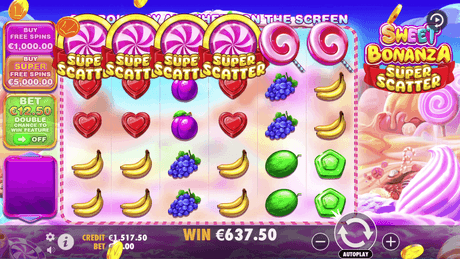
Free play can be a useful way to understand a slot’s layout and features before deciding whether real-money play is appropriate. For Canadian readers exploring Sweet Bonanza, the sweet bonanza game can be approached as an information and security question first: who operates the website, what information is requested, and which controls belong to the casino rather than the game? The answers matter because demo access, account protection and identity checks are controlled by the hosting operator.
Free play does not create a separate game account
A free-play version normally uses virtual credits and does not require registration within the slot itself. That means there is no independent game username, password, cashier or customer-support channel to protect. If a website offers a demo mode, access is provided by that website, while the game supplies the playing environment and its rules.
This distinction is important when checking a page that invites you to try the slot. A demo screen should not be treated as proof that the same site offers real-money play, Canadian account services or a particular set of payment methods. It also does not establish that the website is the operator of a real-money casino. Those matters belong to the hosting business and its published terms.
Free play can still help with practical familiarity. You can see the 6×5 layout, observe how winning symbols disappear during Tumbles and locate the information panel. You may also review the displayed rules, including the Scatter and Free Spins descriptions. However, short sessions cannot confirm long-term returns, volatility or the results of a real-money version. The loaded configuration and the operator’s terms remain the relevant sources.
Separate the slot’s rules from casino account rules
The slot has built-in rules for symbols, winning combinations, Tumbles, Scatters and Free Spins. In the documented original version, four or more lollipop Scatters trigger the bonus round, which begins with 10 spins. Additional Scatters can add five spins, and multiplier bombs may appear during the feature. These are game mechanics, not account privileges.
By contrast, registration, age checks, identity verification, password recovery, two-factor authentication and account closure are handled by the casino hosting the game. A player may be asked for personal information when opening a real-money account, but the slot itself does not conduct a separate KYC process. Similarly, a request for photo identification or proof of address comes from the operator’s compliance process.
Keep the two categories separate when reading information online. A promotional free-spin offer is not the same as the built-in Free Spins feature, and an operator’s bonus conditions are not part of the standard game rules. Wagering requirements, maximum promotional bets, expiry dates and withdrawal restrictions must be read in the casino’s own terms rather than assumed from the slot’s information screen.
Check the operator before sharing personal details

Before creating an account, inspect the website’s identity and contact information. Look for a clear operator name, accessible terms, privacy information and a support route that explains how account issues are handled. The presence of a familiar game does not by itself establish who runs the website or what protections apply to an account.
Use a unique password that is not reused for email, banking or social-media accounts. If the operator offers two-factor authentication, enable it through the account’s official security settings. Avoid saving passwords in a shared browser, and do not provide login codes to someone claiming to be support. Legitimate support should not need a one-time authentication code sent to your phone or authenticator application.
Canadian players can consult the Canadian Centre for Cyber Security for general guidance on protecting online accounts. That advice is not confirmation of any casino’s licensing, security or availability; it is a useful baseline for password hygiene, authentication and phishing awareness. Treat unexpected messages, urgent withdrawal claims and requests to install remote-access software as warning signs.
Use the information screen as a security check
The in-game information screen is useful not only for learning the rules but also for confirming what version has loaded. It should identify the applicable game information, including the displayed RTP configuration where provided. Published figures can vary between operator versions, so do not rely on a number copied from another website. Read the details shown in the actual game window.
Compare the title and rules carefully. The original slot should not be confused with later separate releases that use similar candy-themed names. A different title may have different mechanics, features, RTP settings or maximum-win information. Confirming the name before playing helps prevent misunderstandings, particularly when a search result or advertisement uses broad wording.
Review the browser address before entering any account credentials. A secure connection indicator is helpful, but it does not prove that a website is trustworthy; fraudulent sites can also use encrypted connections. Check spelling, avoid links in unsolicited messages and open the operator’s known website independently when possible. If the page suddenly redirects to an unfamiliar domain or requests unnecessary personal information, stop and verify the operator through its published support channels.
Decide what free play can—and cannot—tell you
A demo session can answer narrow questions: Is the interface readable on your device? Can you find the rules? Do the Tumbles and bonus descriptions make sense? Are the sound, autoplay or quick-spin controls easy to locate? These observations can help you decide whether the presentation suits your preferences without risking money or exposing payment details.
Free play cannot answer whether a real-money account will be approved, which identity documents will be accepted, how long a withdrawal may take or whether a particular payment method is available. It also cannot establish the operator’s deposit limits, loss controls, self-exclusion process or support quality. Those conditions must be checked separately before registration or funding.
For a careful decision, use this order: examine the operator, read the account and privacy terms, confirm the game’s displayed information, and only then consider whether real-money play is appropriate. If you proceed, use the casino’s own account controls and keep records of important communications. Stop if the security information is unclear, the terms are inaccessible or the website pressures you to act quickly.
Questions Canadian players often ask
Does free play require identity verification?
Usually, demo access uses virtual credits and does not involve a separate game registration or KYC process. Requirements depend on the website providing the demo. Real-money registration is different: the casino may request personal details, age confirmation, photo identification, proof of address or payment ownership before allowing withdrawals.
Can the slot protect my casino password?
No. The slot does not operate an independent login. Password rules, two-factor authentication, recovery procedures and locked-account support belong to the hosting casino. Use the operator’s official account page, choose a unique password and never disclose verification codes to someone contacting you unexpectedly.
Does a demo session prove the real-money version is fair?
No. A short demo session cannot verify RTP, volatility, maximum-win potential or the exact configuration used for real-money play. Read the information screen in the loaded version and compare it with the operator’s terms. Treat free play as a way to learn the interface, not as a performance test.